Peptide COA Verification: How to Check a Batch Report
Use a peptide COA verification checklist to confirm report details, sample identifiers, issuer information and document revisions without overstating authenticity.
Our articles on laboratory research methods and reading the literature.
Use a peptide COA verification checklist to confirm report details, sample identifiers, issuer information and document revisions without overstating authenticity.
Compare peptide testing methods, including HPLC and mass spectrometry. Understand identity, chromatographic purity, quantitative content and report limitations.
Understand research peptides, research-use-only labels, synthetic peptide descriptions and the analytical records to review before interpreting supplier claims.
Compare research peptide suppliers using batch-specific COAs, material descriptions, analytical methods and documentation support rather than broad quality claims.
Learn what synthetic peptides are, how synthesis differs from characterization, and which identity, purity and content records to review for research.
Review peptide salt forms and counterion information alongside water and content results. Learn which reporting questions to ask when comparing documents.
Understand peptide mass spectrometry reports by checking expected material, observed values and method scope. Keep identity conclusions tied to sample records.
Review HPLC peptide purity testing by checking chromatogram labels, sample identity and integration basis. Understand what a purity percentage can support.
Review modified peptides by recording sequences, terminal groups and stated changes. Compare research papers and supplier descriptions without losing qualifiers.
Use peptide identification records to compare names, sequences, synonyms and database identifiers. Keep supplier material and batch connections explicit.
Learn what research use only peptides means in supplier documentation. Review RUO scope, batch records, analytical evidence and research responsibilities.
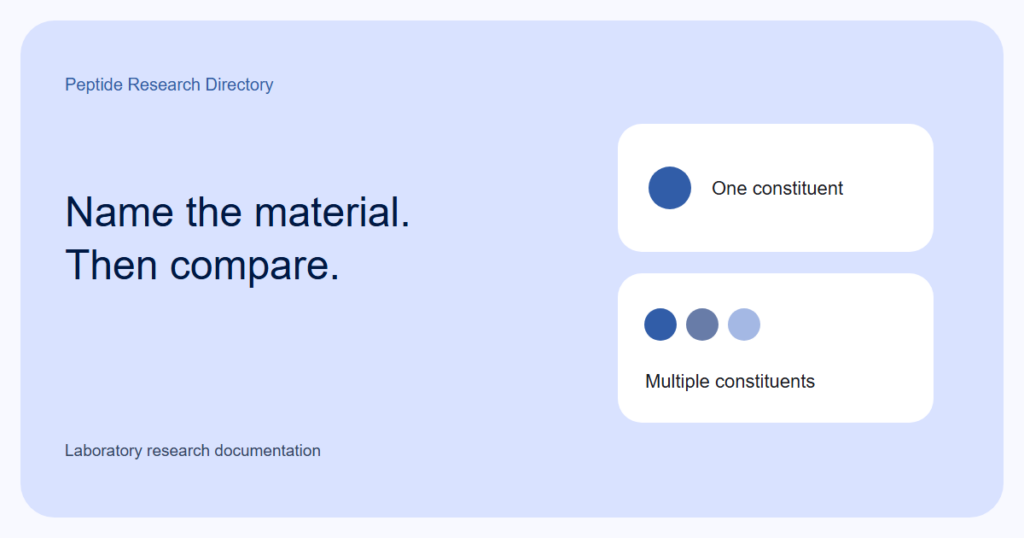
Compare single peptides vs peptide blends by material identity, constituents and analytical scope. Learn which records to check before comparing research.
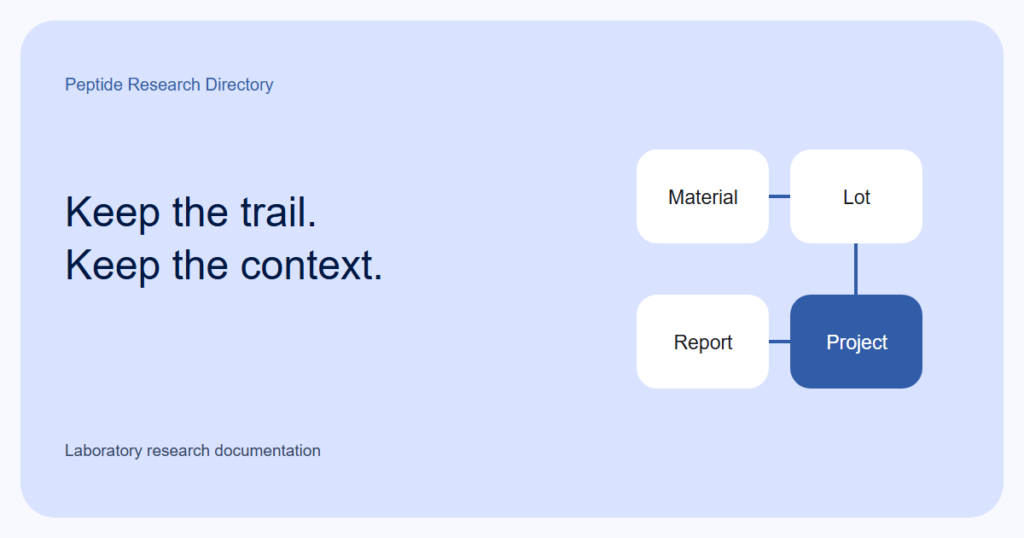
Build peptide batch traceability by connecting lot numbers, certificates of analysis and document revisions. Keep a research record another reader can check.
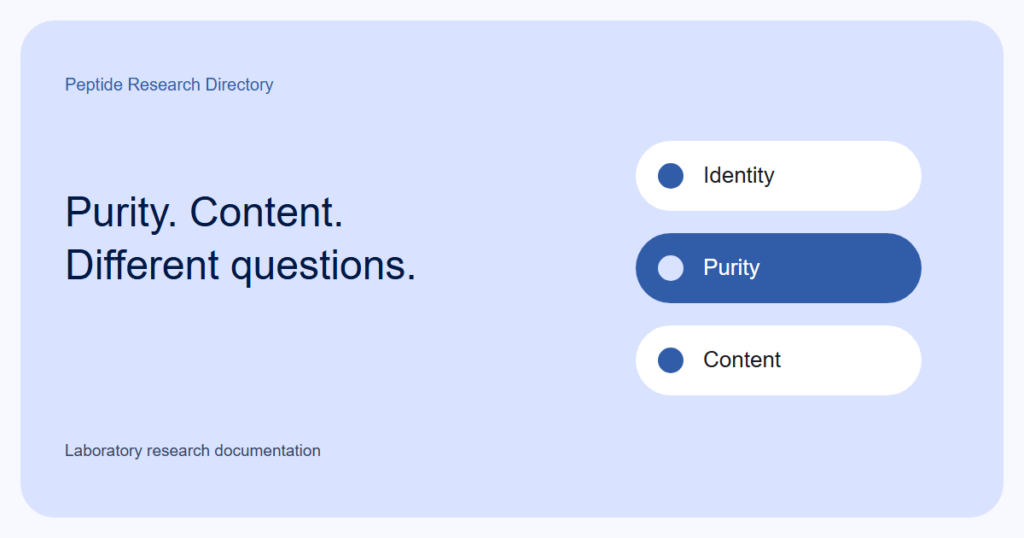
Understand peptide purity vs peptide content, including HPLC area percentages, quantitative reporting and the questions to ask before comparing results.
Read a peptide certificate of analysis step by step. Check batch identity, HPLC purity, mass spectrometry, reporting basis and unanswered COA questions.
Plan a peptide literature search using PubMed, verified names and original research papers. Learn how to save queries, follow references and assess relevance.
Learn how to check peptide research evidence, trace claims to original studies, review limitations and distinguish scientific findings from supplier records.
Build a peptide research log with fields for study models, methods, findings and source links. Use a reusable template to keep evidence organized.