Research Use Only Peptides: What RUO Means for Researchers
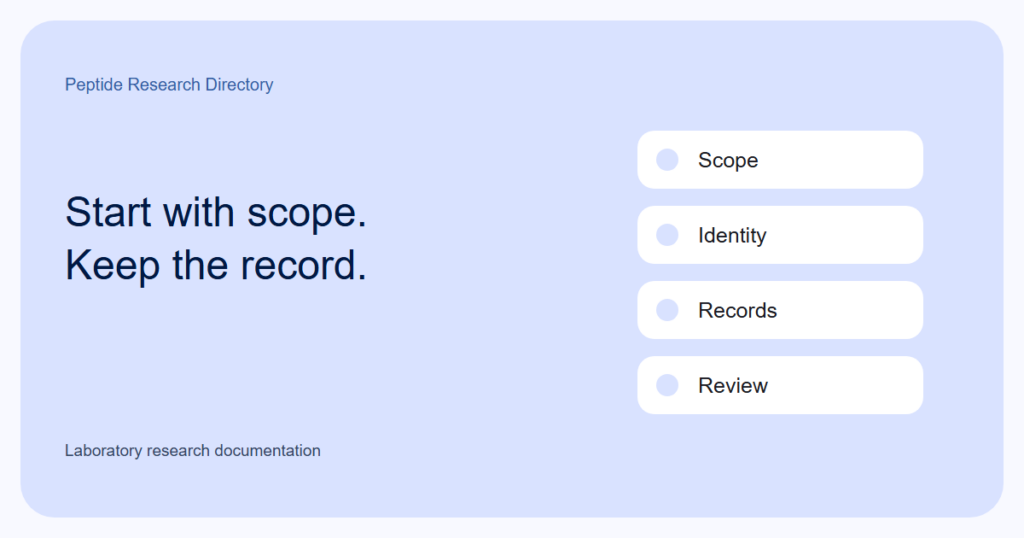
Research use only peptides are materials supplied under a stated research-use scope. The RUO label should be read alongside the supplier policy, material identity and analytical documentation. It does not by itself establish safety, effectiveness or suitability for a particular project.
Disclosure: We have a commercial partnership with 50aminos and a financial interest in its promotion.
What does research use only mean for peptides?
In its research-use-only policy, 50aminos describes its materials for laboratory and non-clinical research and excludes human and veterinary use. Treat that as the supplier’s stated scope. Save the policy location and the date you reviewed it, then identify who within your organization is responsible for deciding whether the intended project fits the applicable requirements.
This article does not determine legal eligibility or interpret a regulatory category for every research product. Use the current supplier policy and your institution’s own review process.
Build a documentation packet around a specific material
A useful packet contains records someone can connect to the same material. Start with the full listing name, supplier product identifier and visible batch or lot identifiers. Add the relevant analytical document and keep a record of its issue date or revision when provided.
If the listing names a blend, record the complete name and the constituent questions that remain. Our single-peptide and blend documentation guide explains why one recognizable name cannot stand in for the entire material.
A research-use-only documentation checklist
- Scope record: Supplier policy URL, review date and the intended laboratory context.
- Identity record: Full material description, qualifiers and identifiers.
- Batch connection: The documented relationship between the listing, lot and report.
- Analytical record: Test names, reported results and unanswered method questions.
- Responsibility: The person or process responsible for reviewing open questions.
- Decision record: What was reviewed, what remains unresolved and the basis for the next step.
Use these as organizational prompts. They do not replace an institutional procedure or establish that a material meets a particular research requirement.
Keep a policy statement separate from analytical evidence
A scope statement and a test report answer different questions. Record the supplier’s intended use in the scope field. Record analytical observations under the named tests. Do not treat the presence of one document as proof of what the other would need to demonstrate.
The peptide certificate of analysis checklist provides a reading order for the analytical part of the packet. It helps you identify the result, its material connection and the questions you still need to ask.
Write questions that documentation support can answer
Ask for information tied to a record: which document covers a visible lot, whether a file has a newer revision, or how a sample identifier connects to a product entry. Include the identifiers already available and keep each question specific.
Keep human-use, veterinary-use and administration questions outside this process. A supplier support conversation about documentation does not create permission to use a material outside its stated research scope.
Place authentication in the project review
NIH’s key-resource authentication notice gives an example of a formal research context in which investigators must plan how to authenticate resources. Its requirements concern the applications it covers; they do not automatically apply to every purchase.
In your packet, identify the relevant project review and leave room for its outcome. Supplier documents can inform that review without replacing the responsibility of the researcher or institution.
Close the packet with a record someone can revisit
Save the source files, review date, open questions and replies together. When a policy or report changes, retain the earlier version and record the reason you updated the packet. That makes a later review possible without relying on memory.
A useful final note describes the scope reviewed, the evidence available and the question that still needs an answer. It does not turn a research label into a promise of safety, effectiveness or suitability.
Is an RUO label the same as an analytical quality result?
No. A research-use statement describes the supplier’s intended scope. Analytical results describe observations under named tests. Review both, and keep project requirements and institutional responsibilities separate.
Laboratory and non-clinical research information only. Not for human or veterinary use. No dosing, administration or treatment guidance.