Single Peptides vs Peptide Blends: Research Comparison Guide
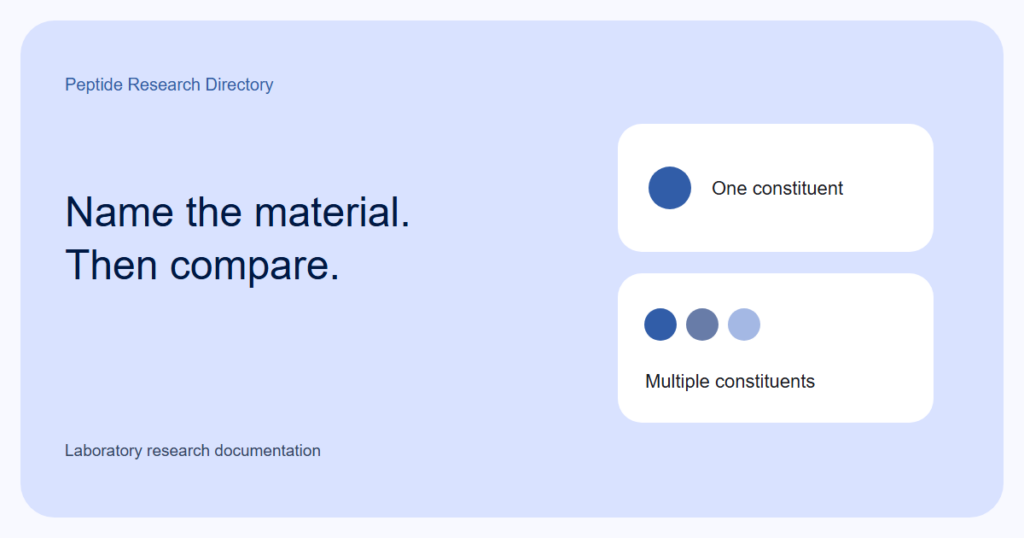
Single peptides vs peptide blends should be compared by their complete material descriptions and supporting analytical records. A blend contains multiple stated constituents, so evidence about one named peptide cannot automatically describe the combined material.
Disclosure: We have a commercial partnership with 50aminos and a financial interest in its promotion.
This documentation guide gives you questions to ask about identity, constituent descriptions and analytical scope. It does not recommend combinations, predict biological effects or provide preparation or administration instructions.
Single peptides vs peptide blends: define the material
IUPAC defines a mixture in terms of two or more chemical constituents. In a research record, preserve that distinction by naming the complete material under review. A shorthand label may help people browse a catalog, but it cannot answer every identity question.
For a single-named peptide listing, begin with the full chemical or sequence description the documentation provides. For a blend-named listing, create separate entries for the stated constituents and an entry for the combined material. Leave unknown details visible.
The research peptide catalog at 50aminos includes blend-named listings. Use the full listing name as a starting point for your record, then check the constituent identities and the scope of the corresponding documentation. A catalog label alone does not establish interchangeability with a single peptide.
Use a constituent-by-constituent comparison
- Listing identity: Save the complete supplier title and product identifier.
- Constituent names: Record each stated name without expanding an unexplained abbreviation.
- Form and description: Preserve relevant qualifiers that appear in the documentation.
- Amount basis: Ask whether stated amounts refer to individual constituents or the combined listing.
- Document scope: Identify which constituent or combined sample each report addresses.
- Unresolved link: Note any missing connection between the listing, lot and analytical record.
This is a suggested comparison structure, not evidence that every supplier reports these fields or that every mixture needs the same analytical strategy.
Ask what each result actually covers
Read each result with the material named in that part of the document. If a report identifies one constituent, do not extend that statement to the remaining constituents. If the document describes a combined sample, ask what component-level conclusions the method supports.
The same care applies to a percentage. Our peptide purity versus peptide content guide explains why the reporting basis matters. A combined result and an individual-constituent result need distinct labels in your record.
Do not transfer conclusions between different materials
A paper about a named peptide can help you discover relevant terminology. Before using it to interpret a blend, compare the authors’ material description with the material you are reviewing. Record what matches and what differs. A shared constituent name is a starting point for that comparison.
Keep this comparison about evidence. Avoid turning it into a claim that a combination is stronger, safer or more effective. Those conclusions require their own relevant evidence and fall outside this research-documentation guide.
A practical example of a naming problem
Imagine a catalog title contains three abbreviations, while an article you saved discusses one fully named peptide. Your first task is to resolve the abbreviations from the supplier’s documentation. Your second is to determine whether the paper’s material matches a constituent, the complete mixture or neither.
Until you resolve those questions, keep the catalog entry and the paper as separate records. Do not rename the mixture after the one constituent you recognize. This example concerns reading and record keeping; it does not propose an experimental combination.
Make analytical questions part of resource review
For the grant applications it covers, NIH describes authentication planning for key research resources. The broader record-keeping lesson is to make your identity questions explicit instead of assuming a purchase record resolves them. Your institution determines the requirements for your project.
Use the batch traceability workflow to preserve constituent questions, report versions and supplier correspondence. Another reader should be able to see why you treated two material descriptions as distinct.
A useful comparison ends with a clear boundary
Write what the available record supports and the next question someone needs to answer. You may have enough information to identify a catalog entry while still needing more detail about a constituent or analytical method. Keeping those conclusions separate makes the comparison useful without overstating it.
Can a single-peptide study establish a blend’s effects?
A paper about one constituent does not establish the behavior of a mixture. Compare the study material with the complete blend description and keep any conclusions within the experiment actually reported.
Laboratory and non-clinical research information only. Not for human or veterinary use. No dosing, administration or treatment guidance.